How did you get started with remote work?
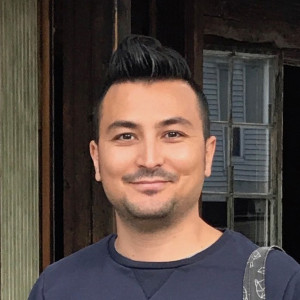
Interview with Mehmet, a nomadic digital maker and entrepreneur
My last formal tech startup business I was running five years ago was in transition to take client work. We were lucky to land a very large fashion retailer client managing luxury fashion brands, and their tech stack required a new set of team members.
We started working with a lot of remote work professionals. This started a shift in our team management model, communication framework, and eventually ignited the adaptation of a workspace free mindset.
We were also traveling more often both for business purposes as well as casual house swaps and month-long tryouts in different cities in the US. It was a weird period, but we went through it to redefine a lot of things in how we work.
Mehmet has embraced his remote team leadership style. Hear about his most helpful productivity trick and why he has "quiet" days for his staff.
Read full interview from Interview with Mehmet, a nomadic digital maker and entrepreneur .
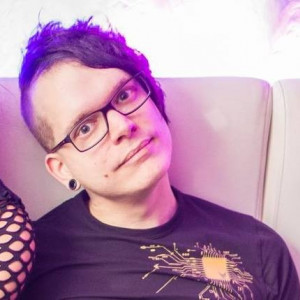
Interview with Kay, an independent software consultant who found freedom in remote work
I worked as a employee for about 7 years at a small software company. After a big project with much overtime, I asked what the manager what he had in mind for me in terms of career growth. He wanted to make me his replacement for head of R&D, but the rest of the management team was against it. They said, a manager can't get to work at 11am, after all the other employees, haha.
In hindsight they were right, I wasn't made for the management job, but I was pretty salty and quit. I did a sabbatical in 2014 and tried to find out what I really wanted, since it wasn't working from 9-5 in some job without future and I had the feeling most jobs were about this. In 2015 I started interviewing again, this time with the goal in mind to get a remote job, because if I had to work 9-5 in a futureless job, at least it should be as comfortable as possible.
I also had the impression that my schedule was already pretty full with my private life. I already played guitar, learned bass in 2014, started swimming and biking and after I started living in non-monogamous relationships I had two girlfriends. So sitting in an office for 40h a week with potentially 10h extra commute every week wasn't an option anymore.
Took half a year until I got a job as a developer at a startup in Frankfurt, Germany, which is about 300km away from me. They let me work from home, but as a freelancer. They said they would employ me regularly if they get their investment, which they got a year later, but the terms for the employment weren't what I had in mind.
But this was a good thing, because the terms which I didn't approve of, showed me what I really wanted.
I didn't just want to work from home, I wanted freedom.
I wanted to decide that I will work for like 6-8 month in a year and still have enough money to have a good time in the remaining 4-6. I wanted the option to walk away in a matter of weeks or even days if I didn't like how a company behaved, I wanted to seize opportunities I would have to ask my employer for if I wasn't a freelancer.
And so I kept working for this startup until their investor forbade them to hire me, because I was too expensive, lol.
In 2017 then I went on to do the full self-employment thing. Find multiple projects, do them for a few months, learn many new things and move on to the next. While the process of finding these projects (interesting + remote) isn't that easy, I feel much better than ever before in my life.
Learn how Kay made the jump from full-time employee to full-time remote consultant
Read full interview from Interview with Kay, an independent software consultant who found freedom in remote work.
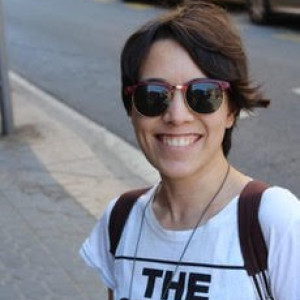
Interview with Cecilia, a content writer managing her remote career in Dubai
I started working remotely in 2016, but I tried to work as a freelancer for several years before that.
In 2010, around the time I graduated from university, I set up a simple website to promote my proofreading services. Unfortunately, I didn't know how to promote myself and was too shy to put myself out there.
In 2015, after completing my master's degree and returning to my country to find work, I joined a few marketplaces to start finding freelance jobs. And I did! The jobs weren't very well-paid, but I did have the chance to work with good clients, and the workload was light enough that I could combine it with my office job at an advertising agency.
I started translating blog posts for a small real estate company in Spain, as well as writing blog posts about lots of different topics—from nutrition to rugs!
The next year, I found a remote position as a moderator for a client in Belgium.
Since then, I've worked with more clients to the point I was able to quit my office job in 2018 to go fully remote.
Cecilia got her start translating blog posts, and in 2018 she went fully remote. See her tips for managing an international remote work career.
Read full interview from Interview with Cecilia, a content writer managing her remote career in Dubai.
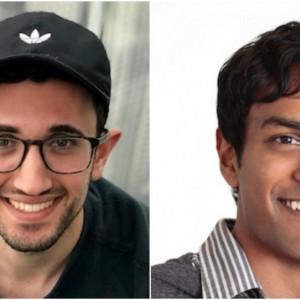
Company Interview with Doug and Vivek, co-founders of remote tool, Pragli
I generally see two different reasons teams transition to remote:
-
Talent retention: Someone needs to move away for a personal reason, but the company wants to retain them. This becomes a slippery slope to creating a remote policy for everyone.
-
Talent acquisition: the company feels they are limited by their geography, so they begin building out teams remotely. A good example is Stripe.
I generally see three reasons teams start out remote:
-
Founder lifestyle: The founder lives away from a talent hub or wants to be a digital nomad.
-
Open source: Companies start as open-source projects with contributors all over the world. Examples: lots of crypto companies, Elastic
-
Forward-looking: Some companies believe remote is inevitable, and want to lean into it by building a remote-first company
Doug has interviewed hundreds of remote teams as a co-founder of Pragli. Here's what he sees as common remote management patterns amongst those teams and organizations.
Read full interview from Company Interview with Doug and Vivek, co-founders of remote tool, Pragli.
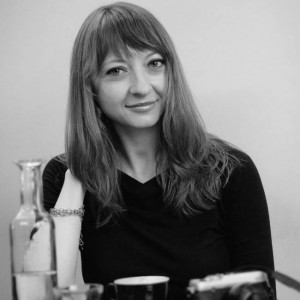
Interview with Pola, a Paris-based content writer
I had done freelance work before as a travel writer, but it wasn’t until I found my current job that I learned the term remote-first.
It’s having the freedom to work from anywhere, as opposed to a company policy that allows for occasional work-from-home days.
A job ad in an online group led Pola to find her ideal career as a content writer—see her remote work & job seeking takeaways.
Read full interview from Interview with Pola, a Paris-based content writer.
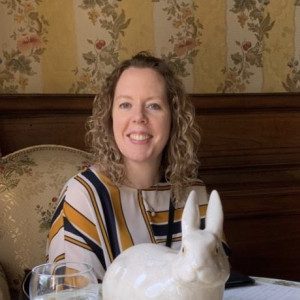
Interview with Emma, a freelance marketing consultant
I’ve actually been pretty lucky with a few jobs I’ve had over the years as I’ve worked on ‘global,’ dispersed teams and invariably then been able to work remotely. I worked for HP a while back and actually most of my team were based in San Francisco!
It certainly made for interesting working hours what with me being in the UK. More recently though, since November of 2018, I’ve been working as a freelance marketing consultant across a number of different clients, and so I’m able to do that fully as a remote worker.
Emma is thriving as a freelance marketing consultant—see her tips on managing client demands & making yourself marketable as a freelancer.
Read full interview from Interview with Emma, a freelance marketing consultant.
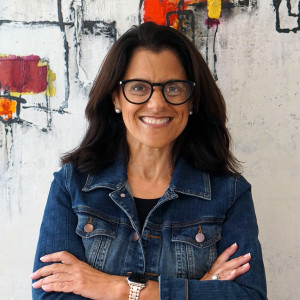
Interview with Shelly, CEO of Fire Engine RED & remote work pioneer
We’ve been fully remote since I founded the company in 2001.
In fact, Fire Engine RED was one of the first all-remote companies in the U.S., possibly the world.
I’d love to say that my decision to start a 100 percent remote company was part of some grand vision (like, “This will be the future of work!”). However, the truth is, Fire Engine RED began operating as a virtual company out of pure financial necessity.
Twenty years ago, Shelly started one of the first all-remote U.S. companies. See how remote work has given Fire Engine RED a competitive advantage & the four most important words in the employee handbook.
Read full interview from Interview with Shelly, CEO of Fire Engine RED & remote work pioneer.
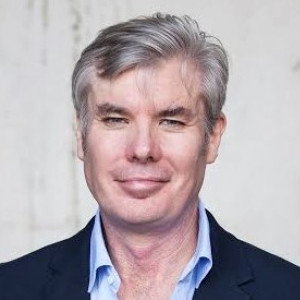
Interview with John, an international business writer sharing 15 years of insights
I was asked by a client to work remotely in 2002. My role was international business development and marketing. I’ve worked remotely since then except for occasional breaks totaling about two years. So altogether I’ve been working remotely 15 of the last 17 years.
For over a decade, John has worked as an international business writer. See his insights on the state of remote work, freelancing, and attracting clients who are the right fit.
Read full interview from Interview with John, an international business writer sharing 15 years of insights.
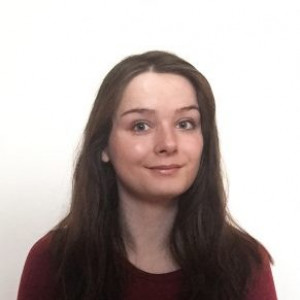
Interview with Alyssa, a copywriter and content strategist
I took a remote paid marketing internship for a music technology company.
Alyssa has found her rhythm as a freelancer and founder of the blog, Freelancing Flow—see her tips for keeping it all running smoothly.
Read full interview from Interview with Alyssa, a copywriter and content strategist .
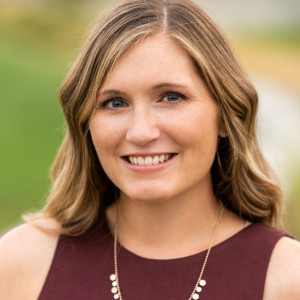
Interview with Audrey, a military wife thriving as a marketing manager
I started looking into remote work options when I married my husband - who was an active-duty Army officer at the time.
I was moving from Louisville, KY to Colorado at the time with many more moves in our future, and I knew in order to really establish a career and advance within one position, I needed it to travel with me wherever the Army took us.
Luckily, the opportunities for remote work in marketing are pretty vast—and always growing.
Honestly, when I found a position with my current company Boldly it was not a difficult transition for me to leave office jobs behind.
I am a natural introvert, and I focus better in my own environment — so I found remote work very conducive to my preferred work style.
The company has a very inclusive culture, so even though I am working on my own, I never feel 'alone.'
I've been working remotely with Boldly for five years now, been promoted and genuinely enjoy what I'm doing — so it's literally a dream realized.
Marrying an active-duty army officer sent Audrey on the search for a remote work position—see how she has established her career while staying on the move.
Read full interview from Interview with Audrey, a military wife thriving as a marketing manager .